%22%3E%0A%3Cpath%20d%3D%22M412%20101.2H393.7C393.1%20101.2%20392.3%20100.9%20391.8%20100.5C377.3%2087.6004%20362.9%2074.6004%20348.4%2061.6004C344.8%2058.4004%20341.3%2055.2004%20337.7%2052.0004C337.1%2051.5004%20336.2%2051.1004%20335.5%2051.0004C334.2%2050.8004%20333%2051.0004%20331.5%2051.0004V101.1H316.7V0.100391H331.4V44.3004C331.9%2044.3004%20332.2%2044.4004%20332.5%2044.4004C334.9%2044.4004%20337.2%2044.5004%20339.6%2044.4004C340.4%2044.4004%20341.3%2044.0004%20341.8%2043.5004C351.6%2034.4004%20361.4%2025.2004%20371.1%2016.0004C376.5%2010.9004%20381.9%205.90039%20387.3%200.800391C387.9%200.200391%20388.5%200.000390626%20389.3%200.000390626H400.9C384.2%2015.8004%20367.8%2031.3004%20351.2%2047.0004C371.5%2065.0004%20391.8%2082.9004%20412.1%20100.9C412.1%20101%20412.1%20101.1%20412%20101.2ZM180.9%20101.2C184.1%2094.9004%20187.2%2088.9004%20190.3%2082.8004C198.3%2067.3004%20206.2%2051.8004%20214.2%2036.2004C220.3%2024.4004%20226.4%2012.5004%20232.4%200.700391C232.7%200.100391%20233%20-0.0996094%20233.7%20-0.0996094H248.1C248.8%20-0.0996094%20249.2%200.100391%20249.6%200.800391C256%2013.3004%20262.4%2025.7004%20268.8%2038.2004C279.3%2058.6004%20289.8%2079.0004%20300.3%2099.5004C300.5%20100%20300.8%20100.4%20301.1%20101.1C300.5%20101.1%20300.1%20101.2%20299.7%20101.2H286.5C285.6%20101.2%20285.1%20100.9%20284.7%20100.2C280.1%2091.3004%20275.4%2082.4004%20270.8%2073.4004C270.1%2072.1004%20269.3%2071.6004%20267.8%2071.6004H209.9C208.7%2071.6004%20208.1%2072.0004%20207.5%2073.1004C202.9%2082.1004%20198.2%2091.0004%20193.6%20100C193.1%20101%20192.6%20101.3%20191.5%20101.3C188.4%20101.2%20185.3%20101.3%20182.3%20101.3C182%20101.2%20181.6%20101.2%20180.9%20101.2ZM239.1%2011.4004C230%2029.2004%20221.1%2046.7004%20212.1%2064.3004H266.4C257.2%2046.7004%20248.2%2029.2004%20239.1%2011.4004ZM0%200.000390626H43.4C51.2%200.000390626%2058.7%201.20039%2065.7%204.80039C75.9%2010.0004%2078.9%2018.0004%2078.6%2027.4004C78.3%2034.3004%2076%2040.5004%2071.2%2045.5004C67.3%2049.6004%2062.4%2052.3004%2057.1%2054.3004C50.6%2056.7004%2043.9%2058.0004%2037.1%2058.6004C30.1%2059.2004%2023.1%2059.4004%2016.2%2059.7004C15.8%2059.7004%2015.3%2059.8004%2014.8%2059.8004V101.1H0.1C0%2067.4004%200%2033.8004%200%200.000390626ZM14.8%207.10039V52.2004C23.7%2052.4004%2032.6%2052.3004%2041.2%2050.1004C44.4%2049.3004%2047.6%2048.2004%2050.6%2046.7004C58.4%2043.0004%2062.3%2036.7004%2062.7%2028.0004C63%2019.9004%2059.5%2014.1004%2052.4%2010.5004C47.6%208.00039%2042.5%207.10039%2037.2%207.10039H14.8ZM95.9%20101.1V0.100391H167.3V7.20039H110.7V44.7004H158.1V51.9004H110.8V93.9004H171.1V101C146.1%20101.1%20121%20101.1%2095.9%20101.1Z%22%20fill%3D%22black%22%2F%3E%0A%3Cpath%20d%3D%22M35.0004%2025.7996H42.5004V20.6996H44.8004V33.1996H42.6004V27.5996H34.9004V33.2996H32.7004V20.7996H35.0004V25.7996ZM54.4004%2025.8996V27.2996H48.9004V31.6996H55.9004C55.9004%2032.1996%2056.0004%2032.5996%2056.0004%2033.0996H46.5004V20.5996H55.5004V21.8996H49.0004V25.7996C50.7004%2025.8996%2052.5004%2025.8996%2054.4004%2025.8996ZM25.9004%2033.0996H23.5004V21.9996H17.9004V20.6996H31.6004V22.0996H27.1004C26.2004%2022.0996%2025.9004%2022.2996%2025.9004%2023.1996C26.0004%2026.0996%2025.9004%2028.9996%2025.9004%2031.7996V33.0996Z%22%20fill%3D%22black%22%2F%3E%0A%3C%2Fg%3E%0A%3Cdefs%3E%0A%3CclipPath%20id%3D%22clip0_388_462%22%3E%0A%3Crect%20width%3D%22411%22%20height%3D%22101.2%22%20fill%3D%22white%22%2F%3E%0A%3C%2FclipPath%3E%0A%3C%2Fdefs%3E%0A%3C%2Fsvg%3E%0A)
Trend-spotting: Egyptomania is back!
From Van Cleef & Arpels to Cartier, here’s how luxury’s latest obsession with Ancient Egypt is unfolding.
By Yanni Tan /
Share this article
Ancient Egypt has enthralled artists and designers for centuries, but four waves of Egyptomania throughout modern history showed just how obsessed humanity has been with the lost civilisation.
The first followed Napoleon Bonaparte’s Egyptian campaign at the turn of the 19th century, which introduced Europe to the civilisation’s monuments on an unprecedented scale. Following this was the 1822 deciphering of hieroglyphs using the Rosetta Stone.
The third came when British archaeologist Howard Carter’s 1922 discovery of Tutankhamun’s tomb in the Valley of the Kings fuelled an artistic renaissance that coincided with the Art Deco movement. A revival in the 60s and 70s was led by pop culture, with renewed interest sparked by films such as Cleopatra (1963), exhibitions, and luxury houses.
This moment in time may well become the fifth wave, with a slew of creations and key events paying homage to Ancient Egypt through high jewellery, watchmaking, and decorative arts.
Van Cleef & Arpels: Love letter to the Nile
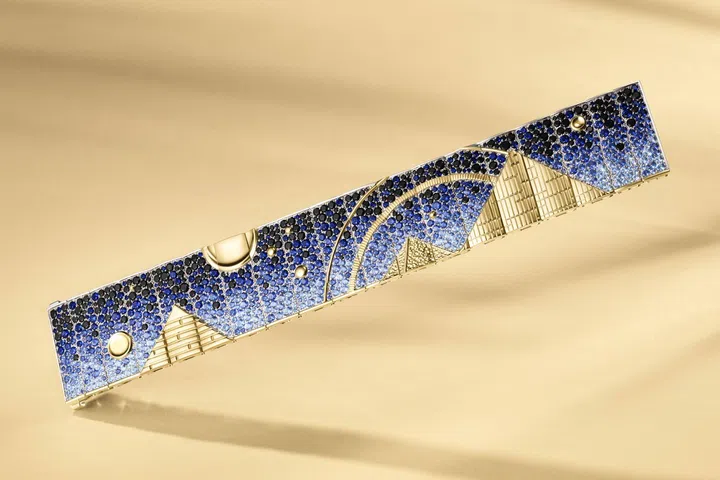
Showcasing an impressive repertoire of around 180 pieces, Van Cleef & Arpels’ new Fascinating Egypt high jewellery collection explores the culture through its architecture, mythology, flora and fauna, decorative expressions, as well as the artistic movements it inspired across the centuries.
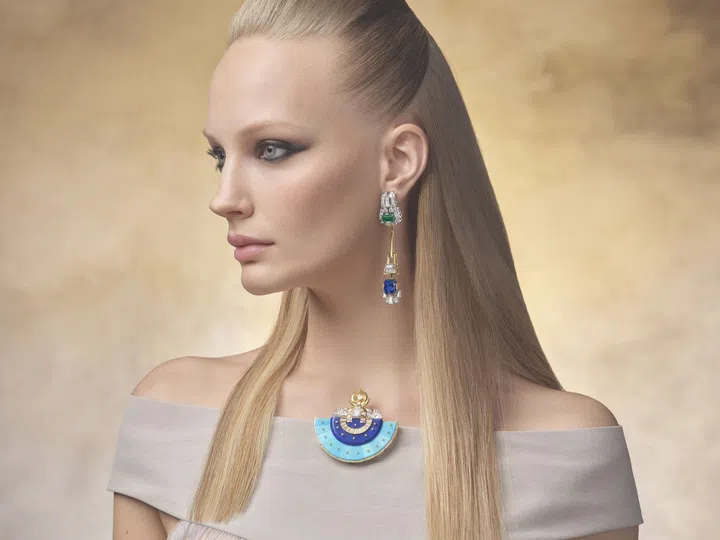
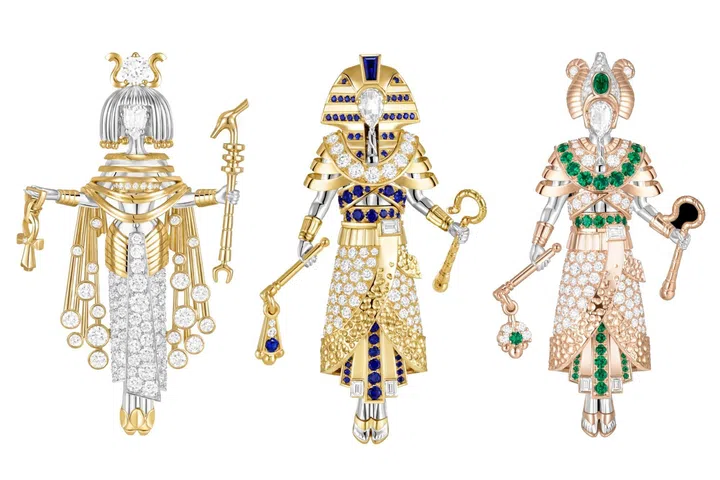
Showpiece necklaces evoke spectacular breastplates, ornamental frescoes, and geometric friezes, while a table clock brings the grandeur of a Luxor temple to life. In addition, bracelets, brooches, and transformable jewels reinterpret deities, sacred animals, lotus flowers, chest jewels, and everyday scenes along the Nile.
Rather than simply reproducing Egyptian iconography, the maison filters these themes through its own refined aesthetic, pairing vibrant coloured gemstones with the sculptural goldwork and exceptional craftsmanship that it is renowned for.
And the most amazing feature: Every piece in the collection is hallmarked with a cartouche (frame) engraved with hieroglyphs reproducing the Van Cleef & Arpels monogram.
The collection also tells a story about the house itself. Founded in Paris in 1906, it emerged just as Europe was rediscovering the ancient wonder.
Within a year of King Tut’s tomb discovery, it had begun creating Egyptian-inspired jewels characterised by bold forms with onyx, emeralds, rubies, sapphires, and diamonds. While many of those early masterpieces now reside in the house’s patrimonial collection, Fascinating Egypt revisits that heritage through a contemporary lens.
From graphic and stylised abstractions to Van Cleef & Arpels’ signature dancer and figurine clips that portray pharaohs and performers with charming fidelity, the current designs are as spellbinding as ever.

HYT: Inspired by the world’s first clocks
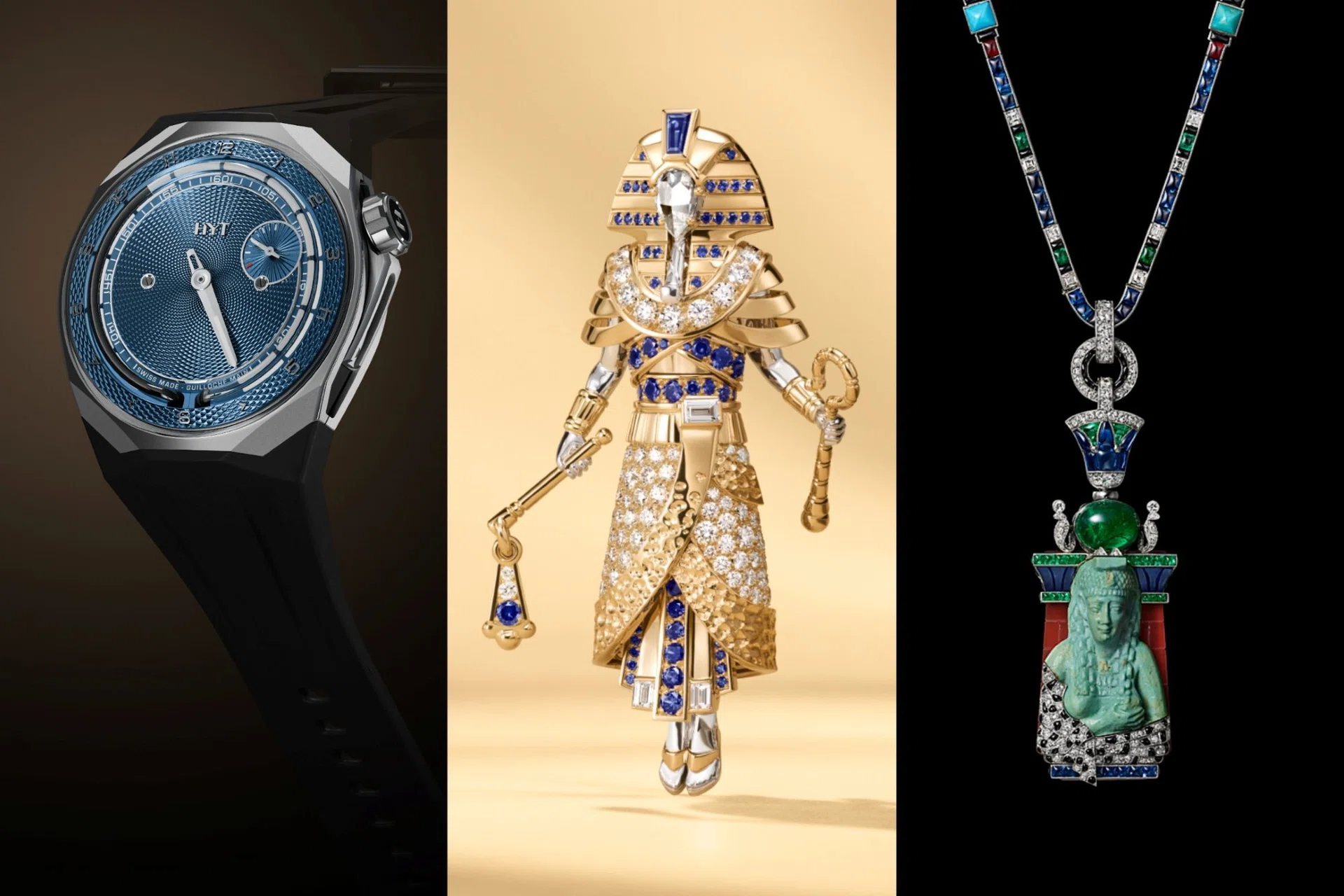
The most unexpected ode to Ancient Egypt comes from independent watchmaker HYT, whose futuristic fluidic display owes its existence to one of humanity’s oldest inventions. The new T1 Titanium Guilloche traces its inspiration to the civilisation’s water clock, or clepsydra, used during the reign of Pharaoh Amenhotep III more than 3,000 years ago.
While those age-old vessels measured time through the controlled flow of water, HYT reimagines the same principle for the wrist. Instead of conventional hour hands, two miniature bellows propel coloured fluid through an ultra-fine glass capillary, creating one of modern watchmaking’s most distinctive displays.

That historical connection becomes more meaningful when paired with another traditional craft. The creation introduces a hand-made guilloche dial, engraved on a rose engine using techniques that have decorated fine watches for centuries .Imagine this: a thoroughly modern hydromechanical movement beneath a dial executed entirely by hand using methods that pre-date industrial watchmaking.
Limited to eight pieces, the timepiece demonstrates HYT’s ability to bridge seemingly distant worlds. Rather than treating Egypt merely as an aesthetic reference, it celebrates one of the earliest-known timekeeping devices.
Chanel: Translating Egypt for the runway
While some houses are introducing new Egyptian-inspired creations, Chanel’s contribution to the latest wave came through the secondary market.
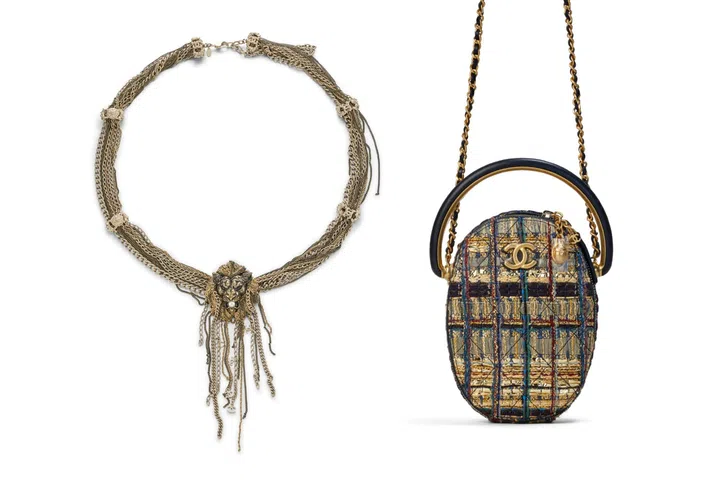
Earlier in May, Bonhams Hong Kong presented three rare pieces from Karl Lagerfeld’s pre-fall 2019 Metiers d’Art collection for an online sale, bringing fresh attention to one of the late designer’s most theatrical runway presentations. The collection originally debuted inside New York’s Temple of Dendur at the Metropolitan Museum of Art, making Chanel only the second fashion house to stage a runway show within the institution.
Lagerfeld had long spoken of his fascination with Ancient Egypt, describing its imagery and culture as timeless. Rather than recreating historical costume, he fused Egyptian symbolism with unmistakable Chanel elegance.
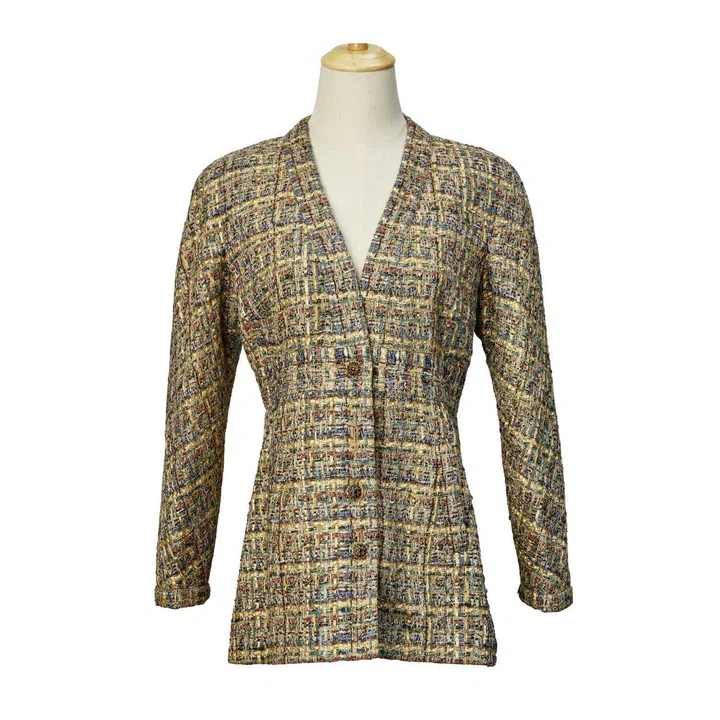
Among the highlights were an oval gold tweed handbag inspired by the sacred scarab beetle, a gold-toned lion chain belt adorned with faux pearls, and a richly textured gold and multi-coloured tweed jacket. The first two sold within estimates, while the jacket achieved twice its highest price target.
Their appearance at auction demonstrates that Egyptomania is not confined to newly launched collections. Great designs inspired by the civilisation continue to resonate years after their debut, finding new audiences among collectors who appreciate both Lagerfeld’s creative vision and fashion’s enduring fascination with the world of the pharaohs.
Cartier: Revisiting a century of Egyptomania
Sometimes the strongest reminder of Ancient Egypt’s influence comes not through a new creation, but by looking back. From now to October 4, 2026, Melbourne’s National Gallery of Victoria is staging the largest Cartier exhibition ever presented in Australia.
The show brings together nearly 400 jewels, watches, precious objects, and archival treasures from the maison’s history.
Direct from London’s Victoria and Albert Museum and expanded for Melbourne, the exhibition traces Cartier’s creative evolution from the early 20th century to the present day, revealing how its designers looked far beyond Europe for inspiration.
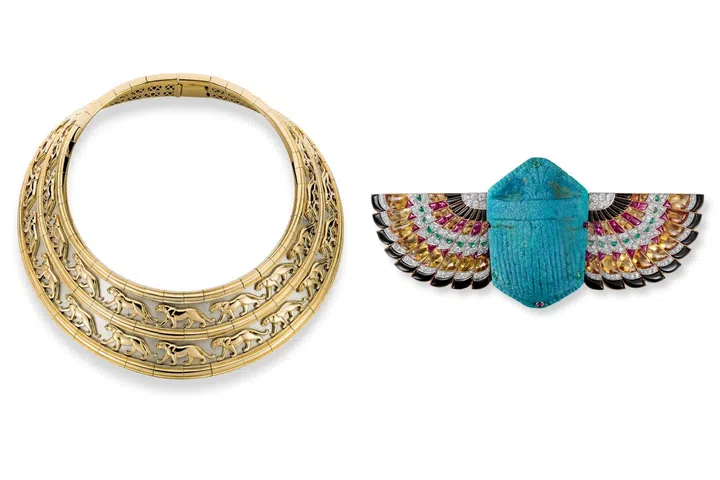
Ancient Egypt occupies a prominent place within that story. Following the discovery of Tutankhamun’s tomb, Cartier embraced the bold geometry, stylised forms, and rich colour contrasts that defined the emerging Art Deco movement.
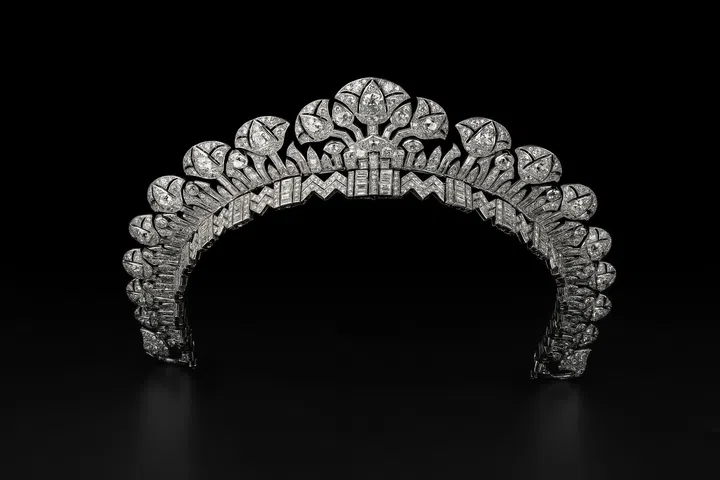
A key highlight reflecting the civilisation’s influence is the 1934 Halo Tiara, whose openwork design combines stylised lotus flowers, papyrus leaves, and fan-shaped sunburst motifs. Also on display are a 1925 winged scarab brooch, a late-1920s pendant necklace with a carving of the goddess Isis, and a Wesekh-style broad collar necklace with Panthere motifs in concentric rows dating to 1991.
With original sketches, archival photographs, and bejewelled masterpieces from the Cartier Collection viewed alongside each other, the exhibition reveals how the maison distilled archaeological discoveries into timeless luxury, and how the culture became woven into the maison’s creative DNA.
Tudor: Referencing the colour of papyrus
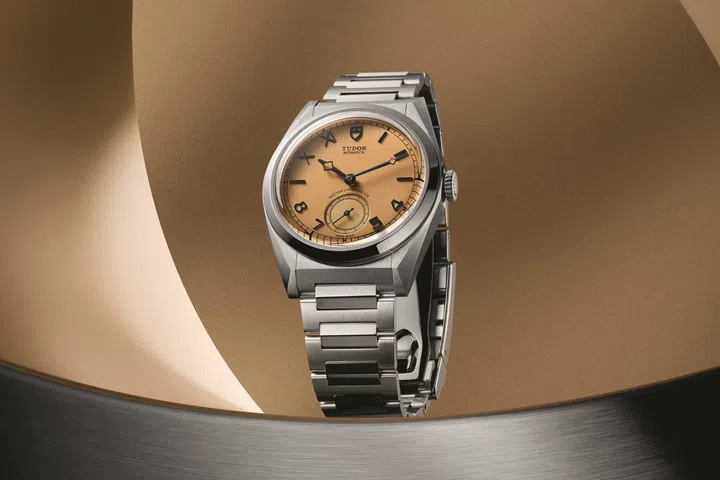
Sometimes, the strongest Egyptian reference is the simplest one. Tudor’s new Monarch doesn’t feature scarabs, hieroglyphs, or pyramids, but instead pays tribute to one of Ancient Egypt’s greatest contributions to civilisation: papyrus.
The watch’s distinctive vertically brushed dial is rendered in a warm papyrus tone, with its hue and texture recalling the writing material that carried the knowledge, literature and history of the ancient world. Paired with an Error-Proof-style dial combining Roman and Arabic numerals, the colour lends the 39mm stainless steel watch a genteel classical character.
Beneath it beats the METAS Master Chronometer-certified Manufacture Calibre MT5662-2U, whose traditional finishing and modern performance reinforce Tudor’s blend of historical inspiration and contemporary watchmaking. It is a subtle design decision, but one that shows how Ancient Egypt’s legacy can be expressed through mood and material rather than overt symbolism.

Baccarat: Bringing the geometry of Luxor into the home
Ancient Egypt’s influence extends beyond jewellery and watchmaking into the world of luxury crystal homeware. Baccarat’s latest Midnight capsule collection casts its arresting Louxor designs in a deep midnight blue, giving fresh expression to one of the maison’s most recognisable collections.
Named after the ancient city of Luxor, the series draws directly from Egyptian architecture. The Louxor vase, photo frame, and votive feature sharply bevelled edges, diamond-cut facets, and strong vertical lines that create mesmerising pyramid-like reflections, while the rich blue crystal heightens the interplay between light and shadow.
It is a subtle rather than literal interpretation of Egypt, proving that some of the civilisation’s most enduring influences also lie in the timeless power of geometry and architectural form.
Patek Philippe: Hieroglyphs become haute horlogerie
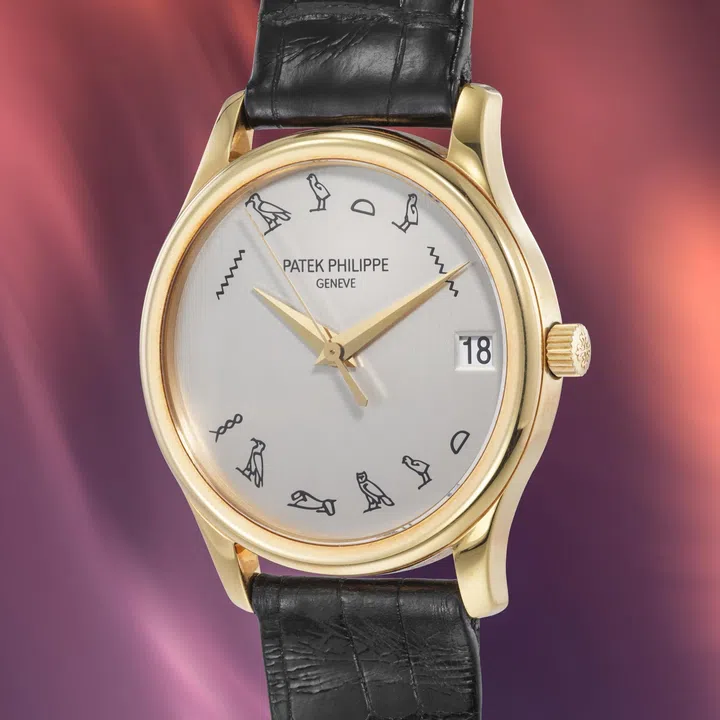
The latest resurgence has also extended into the vintage watch collectors’ market. At Phillips’ Geneva Watch Auction XXIII in May, one of the standout lots was an extraordinarily rare Patek Philippe Calatrava Ref. 3998J-013 featuring Egyptian hieroglyphs in place of conventional hour markers.
Commissioned in 2002, the yellow gold watch is one of only four known examples, making it one of the most unusual modern Patek Philippe watches ever to appear at auction.
Instead of numerals or baton indexes, the dial spells out “HALMUT NAUTUN” in hieroglyphs, widely believed to reference celebrated photographer Helmut Newton. Research suggests that this unique commission was made by Sheikh Saud bin Mohammed Al Thani, the Qatari prince renowned for his passion for art and collecting.
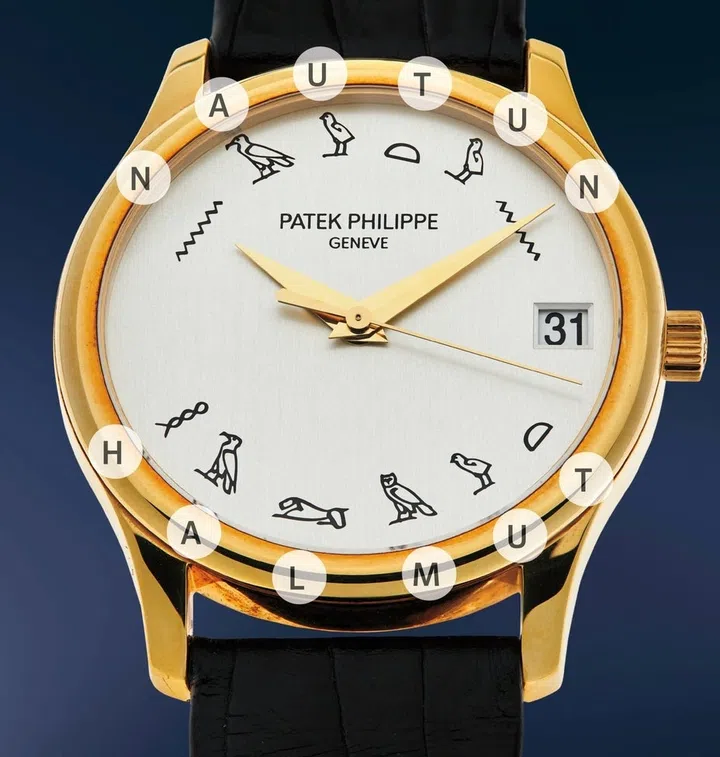
Although it was far from the auction’s most expensive watch, the hieroglyphic Calatrava stood out as one of its most intriguing. And it went under the hammer for CHF444,500 (approx $700,000), which is about three to over five times its estimates of CHF80,000-160,000.
More than two decades after it was created, it demonstrated that Ancient Egypt’s visual language continues to captivate luxury connoisseurs — so much so that even one of watchmaking’s most traditional maisons has, on rare occasions, embraced the mystery and symbolism of one of history’s greatest civilisations.