
Vacheron Constantin and The Met are championing a “tectonic shift” back towards being human
As technology reshapes the way we live and create, an extraordinary artisan residency celebrates the enduring value of traditional craftsmanship and the importance of passing it on to future generations.
By Yanni Tan /
Share this article
In an age when artificial intelligence can generate images in seconds, machines can reproduce intricate patterns with extraordinary precision, and almost anything can be manufactured at scale, something unexpected is happening.
The human hand is enjoying a renaissance. And there was no better way to experience it than during an exclusive press trip to New York City, where we discovered The Metropolitan Museum of Art and Vacheron Constantin Artisan Residency Programme at an international showcase.
Launched in May 2025, the collaboration is a mentorship and incubator initiative that gave three contemporary artists — working in wood, ceramics, and metal — free rein to explore their disciplines, drawing inspiration from The Met’s extraordinary collections and exchanges with Vacheron Constantin’s master artisans and watchmakers in Geneva.
This programme comes at a pivotal moment when society is rediscovering the value of craftsmanship, which Dr Heidi Holder, the outgoing Frederick P. and Sandra P. Rose Chair of Education at The Met, describes as a “tectonic shift”.
Pointing to a growing interest among some young people in the US in vocational training rather than university education, she observes that this may partly reflect a backlash against the rise of AI and its potential impact on knowledge-based jobs.
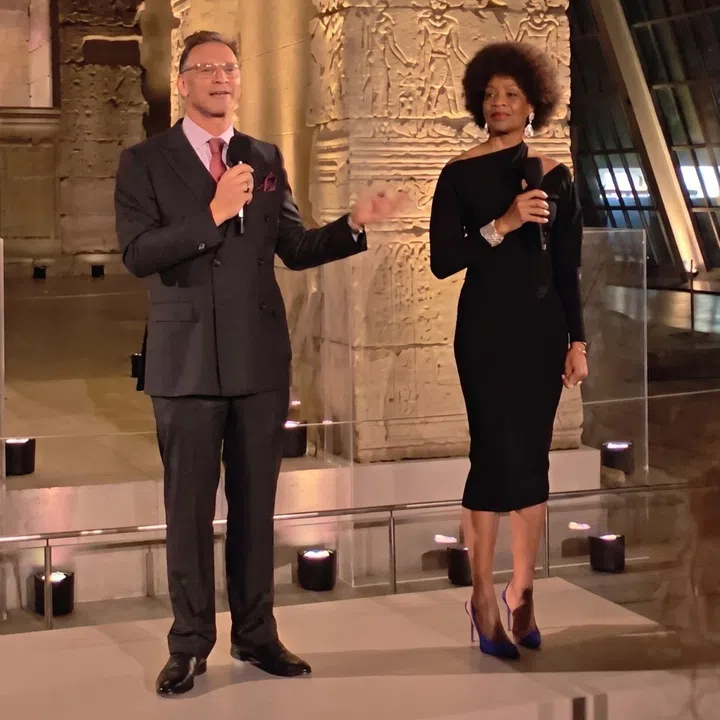
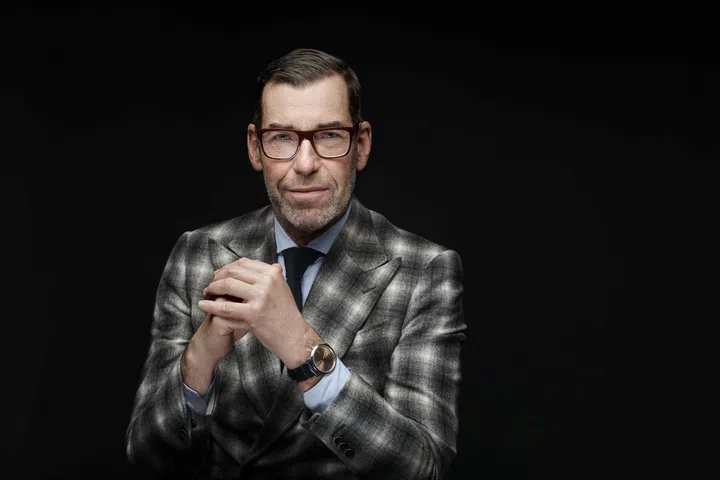
Christian Selmoni, Vacheron Constantin’s style and heritage director, posits that the reason lies in a fundamental human desire to reconnect with the physical world. “We are living so much in such a digitalised world, but we are very much analogue as humans. We are made of flesh and bones.”
Referring to craftsmanship as the “intelligence of the hand”, he recalls how skilled artisans in ancient Greece enjoyed a standing comparable to that of philosophers and physicians. Fortunately for modern society, these two long-standing custodians of artistic heritage are determined to revive that glory.
A meeting of minds across centuries
On paper, a 271-year-old Swiss watchmaker and a New York museum founded in 1870 might seem like unlikely partners. Yet their shared interests run remarkably deep.
The Met’s founding charter established an ambition to use art to inspire and advance craftsmanship, particularly among the makers and artisans of New York City. Holder points out that this mission remains integral to the institution’s identity, extending beyond collecting and exhibiting masterpieces to encouraging contemporary artistic practice.
Vacheron Constantin’s origins are similarly inseparable from the transmission of knowledge. The maison traces its founding to 1755, when Jean-Marc Vacheron signed an apprenticeship contract, formally committing himself to teaching another person the skills of watchmaking.
That emphasis on passing down expertise has continued through generations of watchmakers, engravers, enamellers, guillocheurs, and gem-setters.
“If we look back to Vacheron Constantin’s history, our identity as a maison is very much rooted in two masteries — technicality and decorative crafts,” Selmoni elaborates. “At the end of the day, yes, we are a watchmaking brand because we do actually manufacture timekeepers. However, on top of that, we are craftsmen at the end of the day.”
Into the beating heart of craftsmanship
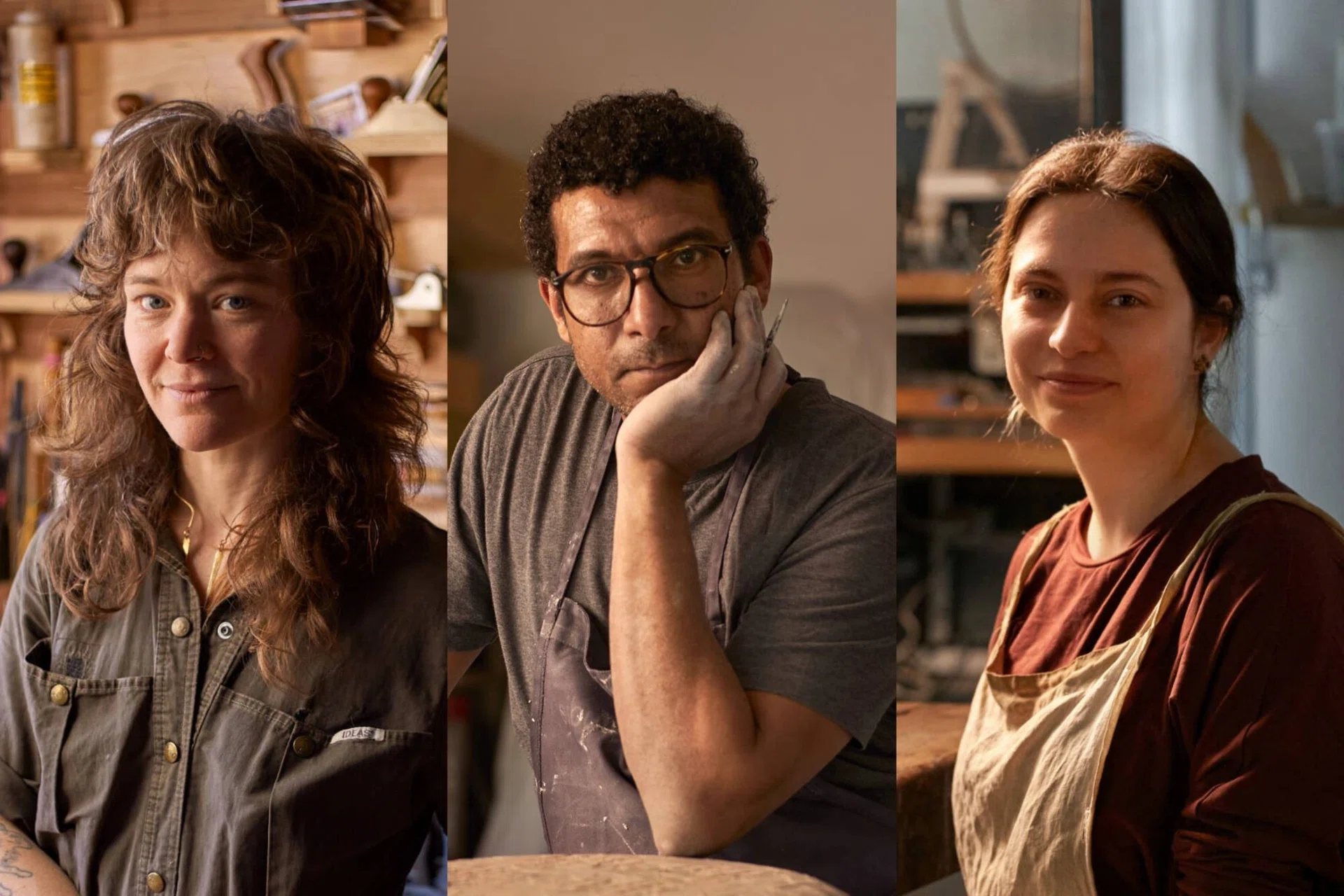
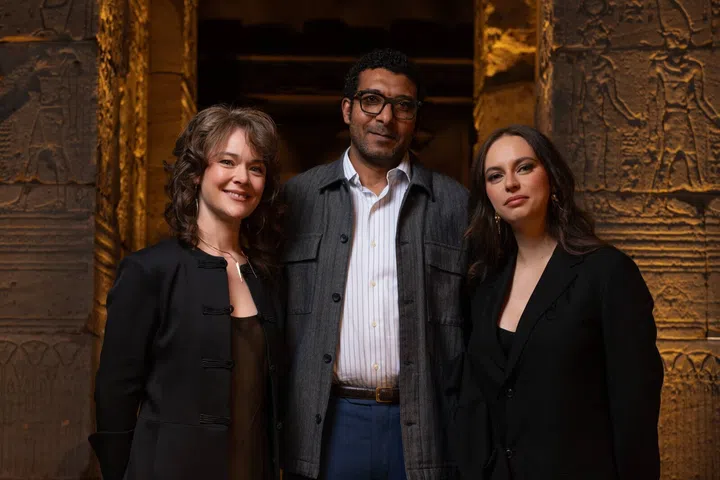
Placing living craftspeople at its centre, the Artisan Residency Programme selected US cabinetmaker and woodcarver Aspen Golann, Egyptian-American ceramicist Ibrahim Said, and Anglo-Italian goldsmith and jeweller Joy Harvey. Over their 18-month residency, they gained access to the collections, specialist knowledge, and creative communities of both institutions.
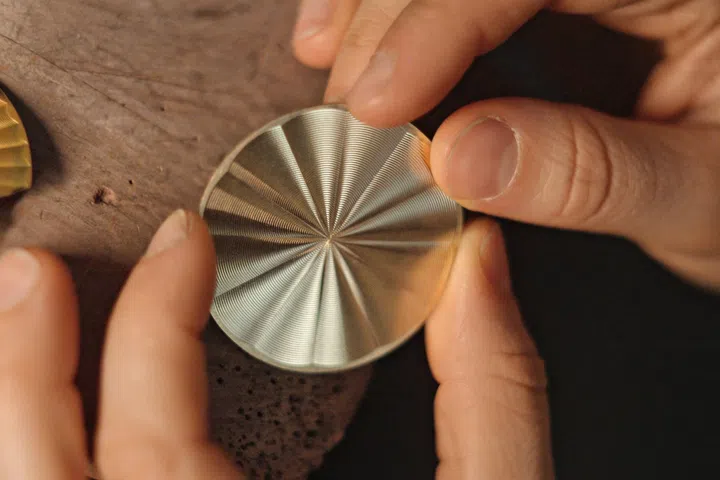
At The Met, they examined historical objects up close, explored storage areas, and consulted curators, conservators, and experts. At Vacheron Constantin’s manufacture, they encountered decorative crafts ranging from enamelling and engraving to guillochage, observing how these techniques are practised and developed.
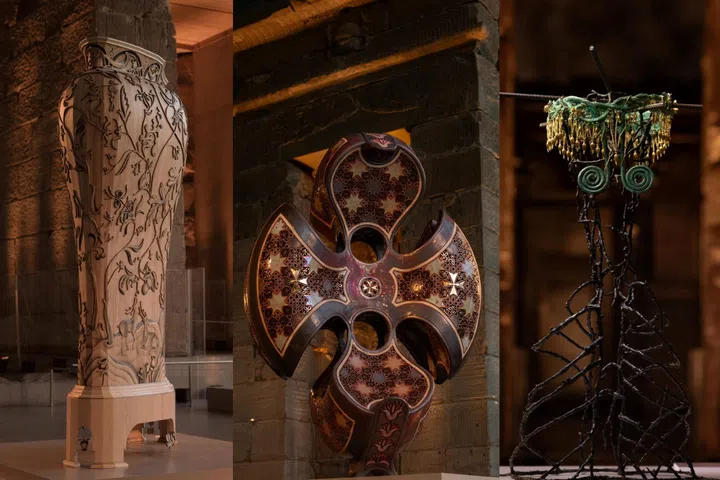
The three resulting artworks, unveiled at The Met on Oct 8, demonstrate how historical techniques can acquire new relevance through a contemporary lens.
According to Holder, the programme rests on three objectives: developing artistic skills, expanding the possibilities of traditional craftsmanship, and inspiring future generations through education and knowledge-sharing.
Its greatest challenge was enabling the artists to draw inspiration from two very different institutions while retaining their individual creative visions. The solution was to provide the resources, specialist access, and freedom necessary for experimentation.
In keeping with Vacheron Constantin’s 2026 theme, Explore All Ways Possible, the maison’s patronage and participation also help ensure that traditional crafts remain living practices that are continually enriched, instead of being preserved merely for posterity. Emphasises Selmoni, “It’s not about replicating the past. I think it’s very much about using creativity and innovation to make your creation relevant in the world in which we are living today.”
The maison’s other artistic partnerships also reflect this conviction. It has collaborated with the Louvre since 2019, The Met since 2023, and the Educational Institute of the Palace Museum in Beijing since 2024.
Three artists, three interpretations of heritage
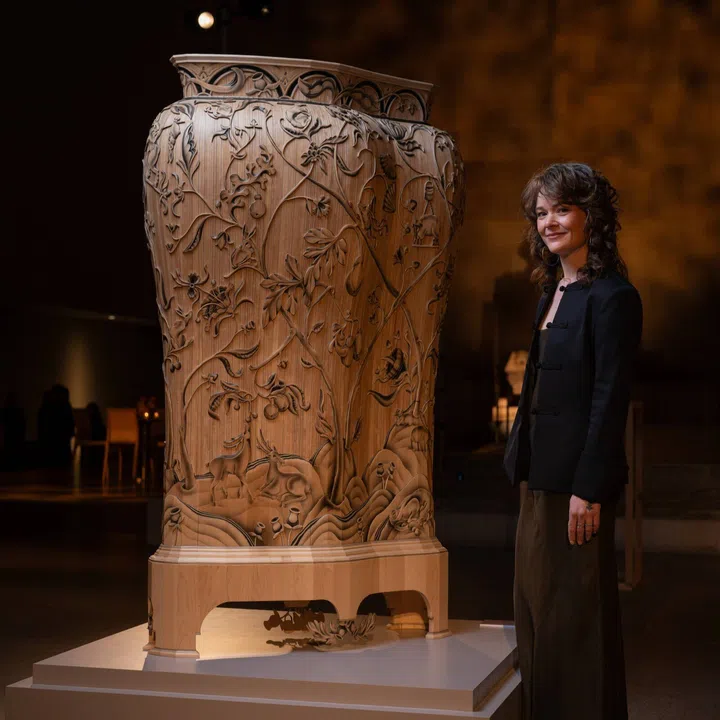
Known for her chairs and furniture-making, New Hampshire-based Aspen Golann explores the history of US furniture and its relationship with gender and power. Her creation, Vessel, is a monumental wooden sculpture standing 1.52m tall, its hollow form adorned with elaborate bas-relief carvings of foliage, fruit, and woodland creatures such as horses and squirrels.
Combining carpentry, cabinetmaking, and sculpture, the work draws inspiration from furniture dating from the 17th to 19th centuries in The Met’s collection, particularly ornately carved chests from Connecticut and Pennsylvania.
Using traditional barrel-making techniques, including steam bending and bent lamination, she shaped strips of wood into curved sections known as staves, which were then assembled to create the sculptural form. Following this, she carved into the layers to reveal contrasting tones, whose striped effects evoke the coloured threads of American women’s historic crewelwork embroidery.
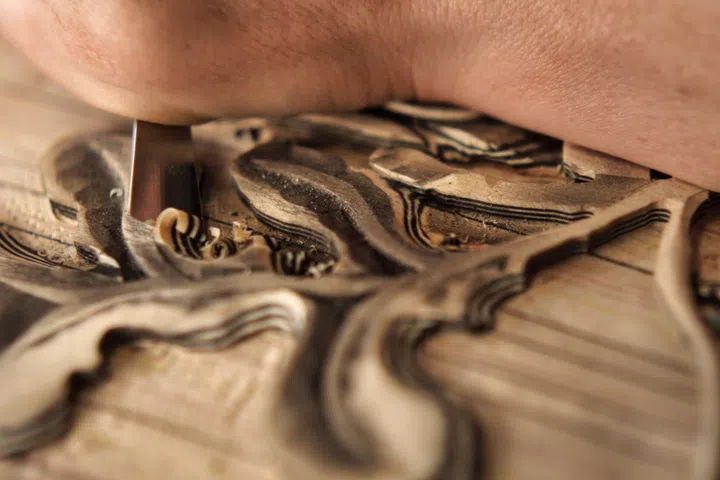
In Geneva, she was struck by the time Vacheron Constantin’s artisans devoted to discovery and experimentation, often without a predetermined commercial objective. “So much of the work that we witnessed wasn’t going into a specific project, object, or outcome. It was purely for training,” she recalls.
“Seeing this sort of unrestrained pursuit of perfection” gave her confidence to pursue her own process. And that proved invaluable as she spent six months developing prototypes and testing materials before completing Vessel. “I think this residency allowed me to grow an entire new arm of my practice,” she reflects.
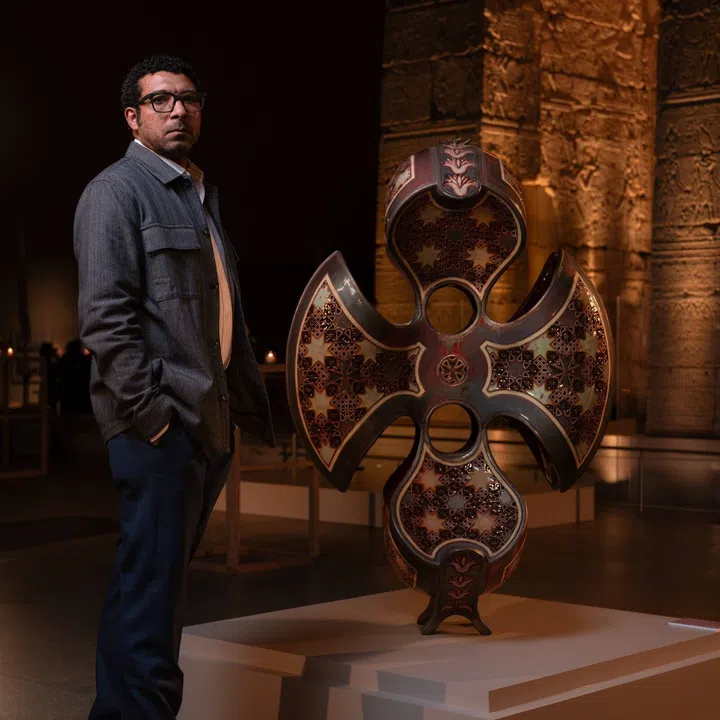
For Egyptian-American ceramicist Ibrahim Said, the residency offered an opportunity to deepen his engagement with his cultural heritage. Born into a family of potters in Fustat, Egypt, he grew up practising techniques passed down through generations.
His creation, Shaping Time, is an imposing three-tiered ceramic sculpture comprising semi-circular forms decorated with relief carvings, pierced patterns, and multi-coloured glazes. Its intricate motifs reference ancient Egyptian and Islamic artistic traditions, while its composition evokes Vacheron Constantin’s Maltese cross.
Among the objects that inspired him at The Met were an ancient Egyptian New Year’s Bottle, an Islamic water filter, and jewellery associated with Tutankhamun and Princess Sithathoryunet.
Said had been fascinated by the bottle even before joining the residency, which provided him with the resources to explore the concept on a more ambitious scale. “Because I’m Egyptian, I come from this culture. I feel this in me,” he explains.
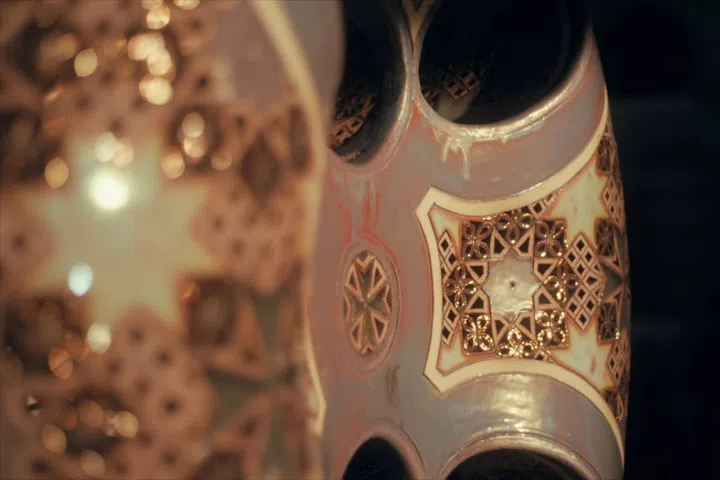
Beyond its technical complexity, Shaping Time explores the relationship between earthly existence and the ancient Egyptian understanding of the afterlife.
His encounters with Vacheron Constantin’s artisans also revealed a shared appreciation of the values underpinning their respective disciplines. Although familiar with many of the decorative techniques, Said was impressed by the maison’s commitment to sustaining them.
“We spoke of patience. Patience is part of my work. We spoke of perfection. Perfection is part of my work. We also spoke of beauty. Beauty is part of my work,” he adds.
Meanwhile, Anglo-Italian goldsmith Joy Harvey confronted the passage of time through Ruined Splendour – Bronze Diadem, an elaborate coronet exploring beauty, destruction, and impermanence.
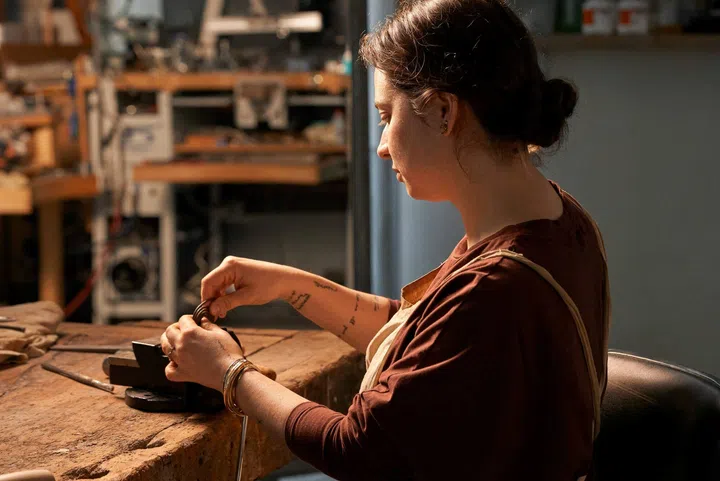
Trained in traditional Florentine jewellery-making, she drew inspiration from ancient jewellery across several civilisations in The Met’s collection, as well as an unfinished painting by Théodore Rousseau depicting a winter sunset in the Forest of Fontainebleau.
Her diadem combines custom metal alloys, intricate granulation, delicate botanical motifs, and more than 2,000 tiny chain links painstakingly fashioned by hand. “Some days, things didn’t work. For instance, the links broke. It was frustrating,” she recounts, highlighting that her experiences connected her to generations of artisans who had faced similar challenges.
During her time in Geneva, she studied guillochage, applying its precise engraved patterns to the metal petals of her bramble flowers before deliberately distorting them through hammering. She subsequently transformed the completed diadem into a ruin by piercing it with machine-made rods, juxtaposing laborious craftsmanship with deliberate destruction.
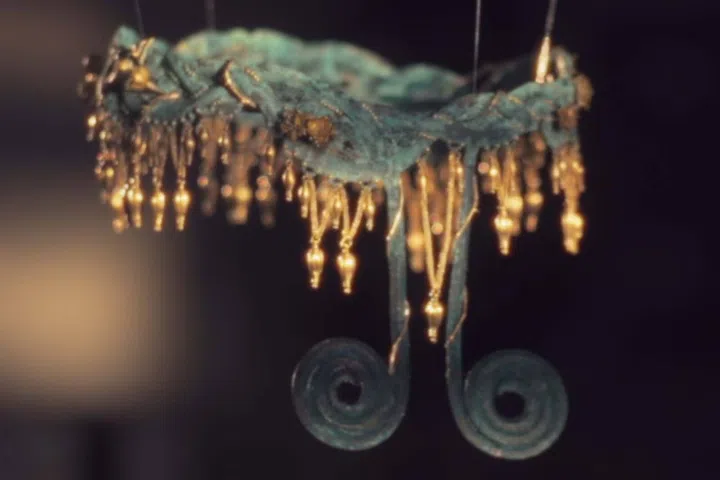
The work reflects her belief that beauty can endure through ageing and deterioration, an idea informed by contemporary concerns about climate change and destruction.
Her experience at Vacheron Constantin also revealed an unexpected affinity with the watchmakers. She was particularly struck by the attention lavished on engraved components that would remain invisible to their owners. “They’re doing it for the beauty,” Harvey says, reinforcing her belief that craftsmanship transcends utility.
Keeping the intelligence of the hand alive
Beyond the three artworks, the residency raises a more pressing question: How can specialist crafts survive when their mastery requires years of training, yet opportunities to acquire those skills remain limited?
Innovation is an essential part of the answer, maintains Dr Holder. “To innovate comes from a word that means to renew or make new. It doesn’t necessarily mean to start from the very beginning again.”
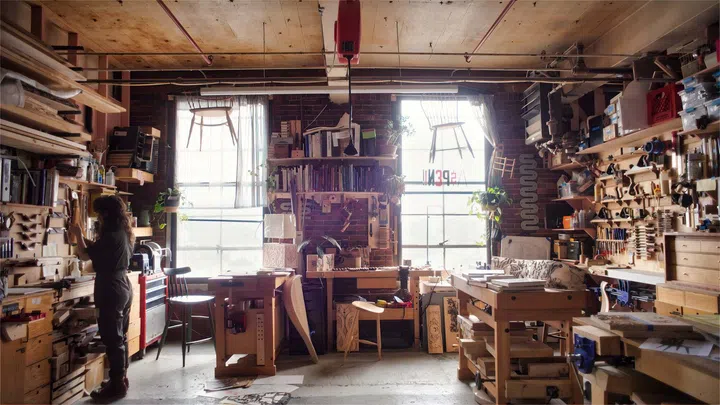
Equally important is recognising that craftsmanship cannot be preserved through documentation alone. Much of its knowledge resides in physical experience: the pressure applied to a tool, the resistance of a material, or the subtle adjustments developed through years of practice.
Golann, who teaches furniture design and making at the Rhode Island School of Design, understands these limitations intimately. “There are aspects of craft that cannot be described. They have to be felt,” she explains, recalling a student who struggled to master a technique despite following her precise instructions. That incident underscores the importance of hands-on learning and the tacit knowledge that can only be acquired through practice.
For Harvey, however, the greatest obstacle is often gaining access to that education in the first place. She spent three years studying goldsmithing at a private school in Florence, an opportunity made possible by her family’s financial support. Others may lack the resources to pursue such training, while even qualified artisans can struggle to establish financially sustainable practices.
Harvey also emphasises the responsibility of consumers to support handmade objects, arguing that craftspeople cannot sustain their livelihoods without a market that recognises the time and labour invested in their work.
The residency seeks to address some of these challenges through financial support, specialist mentorship, and opportunities for the participating artists to share their knowledge. Its educational activities extend to public workshops and community engagement, introducing traditional techniques to audiences who might otherwise have little exposure to them.
The programme also demonstrates the value of exchanges between disciplines. For the artists, access to Vacheron Constantin’s workshops offered fresh perspectives on their own materials and techniques. For the maison, encounters with contemporary makers provide opportunities to consider familiar practices through different artistic lenses.
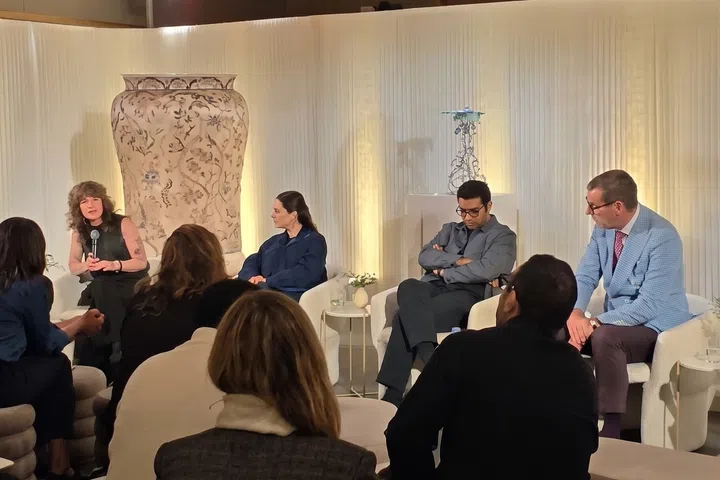
Selmoni describes the residency as an incubator of creativity and innovation, emphasising the mutual benefits of such exchanges. “That opens our minds, and maybe gives some ideas for the future,” he notes.
Golann offers another perspective: “I think of craft as sort of a collective cultural genius”, referring to knowledge refined by countless individuals across generations rather than the accomplishment of any single maker.
The three artworks give tangible expression to that continuity, demonstrating that the future of human craftsmanship lies not merely in preserving its heritage, but in passing it on, enriching it, and inspiring new generations to carry it forward.